Undercut Styles for Women: A Complete Guide to Bold, Wearable Looks
An undercut isn't one haircut, it's a technique. A stylist shaves or clips one section, usually the sides, nape, or an underneath layer, much shorter than the rest, creating a visible line between lengths. That single technique is what makes it so adaptable: the exact same method produces a look so subtle it's invisible under everyday styling, or one dramatic enough to be the whole point of the cut.
If you're weighing whether to shave the sides, disconnect the top, or just try a low, hidden nape undercut, this guide breaks down seven versions, what the upkeep actually looks like, and who each one suits.
Key Takeaways
- Undercuts range from fully hidden under length to dramatically shaved, so there's a version for almost any comfort level.
- Shaved sides and nape sections need a touch-up every 2-4 weeks to stay crisp; the longer top only needs a trim every 6-8 weeks.
- Hair regrows at roughly 0.5 inch per month (American Academy of Dermatology guidance), so a fully grown-out undercut takes close to a year to soften completely.
What Makes a Haircut an Undercut?
An undercut is defined by contrast: one section of hair is cut dramatically shorter than the rest, creating a visible line between lengths. Stylists most often shave the nape, sides, or underlayer while leaving the crown or top longer, which is what separates it from a simple fade.
That contrast is the whole appeal. It lets you wear long, textured, or curly hair on top while still getting the graphic, structural edge of a shaved section underneath. The style also reads differently depending on hair type — straight hair shows a crisp, almost architectural line, while curly or coily hair softens the transition into something less severe.
Which Undercut Style Fits a First-Timer?
A hidden undercut, where the shaved section sits underneath a longer top layer, is the easiest entry point, since flipping your hair down makes it read as a normal cut. It keeps the shaved panel low, near the nape or lower sides, so it stays covered by the length above it.
You get the feel of a bold cut without it being visible in every photo or meeting. If you like it after a few months, the shaved section is easy to expand outward and upward at your next appointment. If you don't, it grows out unnoticed.
How Do Disconnected and Side Undercuts Compare?
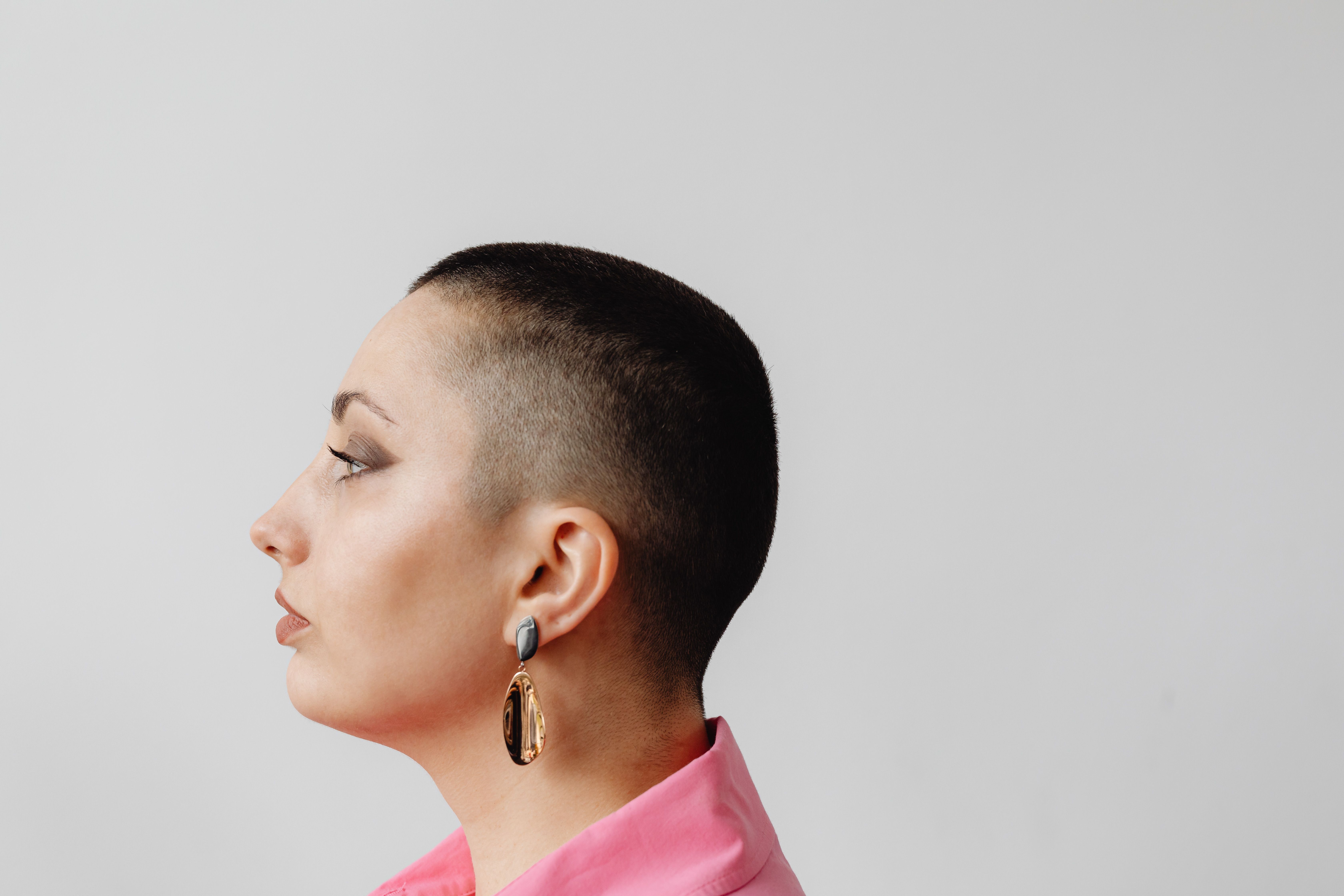
A disconnected undercut creates a hard, visible line between a longer top and a fully shaved side, while a side undercut tapers more gradually from long to short. Both shave at least one side down to skin or near-skin, but disconnection is about the sharpness of that boundary, not just the amount of hair removed.
Disconnected undercuts read as more graphic and modern, think a blunt bob or pixie sitting directly above bare skin. Side undercuts feel softer since the transition is gradual, which some people prefer for more conservative workplaces. Ask your stylist to show you both lines in the mirror before any hair is cut.
What Does an Undercut With a Shaved Design Look Like?
A design undercut adds a shaved pattern, stripes, geometric shapes, or freehand line work, into the shortest section, usually the nape or a side panel. It's the most visually dramatic version of the technique and typically needs a barber comfortable with clipper-over-comb detailing.

Designs are highly personal, so bring a reference photo, but expect your stylist to adapt it slightly to your hair's growth pattern and head shape. Designs need the most frequent upkeep of any undercut variation, usually every 1-3 weeks, because clean lines blur fastest as hair regrows.
How Often Does an Undercut Need Maintenance?
Shaved sides and nape sections typically need a touch-up every 2-4 weeks to stay crisp, while the longer top or crown only needs a trim every 6-8 weeks. That gap in maintenance frequency is the trade-off most first-timers underestimate before committing to an undercut.
| Undercut zone | Recommended touch-up frequency |
|---|---|
| Shaved sides / nape | Every 2-4 weeks |
| Shaved design or pattern | Every 1-3 weeks |
| Longer top or crown | Every 6-8 weeks |
Hair grows back at roughly 0.5 inch (1.25 cm) per month on average, per American Academy of Dermatology guidance, which means a freshly shaved undercut starts to soften within two to three weeks. Stylists generally recommend booking your next touch-up before you leave the salon, since it's easier to keep a consistent schedule than to catch up after a line has fully grown out.

Which Undercut Works Best for Long or Curly Hair?
Long hair and curly hair can both carry an undercut, but the shaved section needs to sit lower and stay smaller so it doesn't compete with the volume and movement above it. A too-large undercut under heavy length or curl pattern can look disconnected from the rest of the style rather than intentional.
For long hair, a nape-only or lower-side undercut hidden beneath the length is the most common approach, showing only when hair is tied up or flipped over. For curly or coily hair, stylists typically taper the undercut rather than shaving it to skin, since a hard line can look harsh against a soft curl pattern.
Is an Undercut Right for Your Lifestyle and Workplace?
An undercut works well in most modern workplaces, but the visibility of the shaved section matters more than the haircut itself. A hidden or low side undercut is essentially invisible in a professional setting, while a design undercut or fully shaved side is a deliberate style statement that reads more casual or creative.

Think about how often you wear your hair up, how conservative your workplace is, and how much time you realistically have for 2-4 week touch-ups. For most people, the honest deciding factor isn't whether they like the look, it's whether their calendar has room for a haircut every few weeks.
An undercut sits in the same family as a few other heavily layered or texture-driven cuts worth comparing before you book, including the wolf cut, the bixie, and the shag, all of which trade some length for more structure and edge.
Does an undercut damage or thin your hair?
No — an undercut is a cutting technique, not a chemical or heat process, so it doesn't cause hair damage or thinning on its own. The remaining hair grows back at the typical rate of roughly 0.5 inch (1.25 cm) per month, per American Academy of Dermatology guidance on average scalp hair growth.
How long does it take to grow out an undercut completely?
Close to a year, based on the average regrowth rate of about 0.5 inch per month. Most people transition it into a new style, like a longer pixie or bob, well before it grows out to a fully uniform length.
Can you still wear your hair up with an undercut?
Yes, and for many versions that's the entire point — an undercut is placed to show when hair is pulled up or back and disappear when it's down. Tell your stylist how you actually wear your hair day to day so they place the shaved section accordingly.
Is an undercut suitable for fine or thin hair?
Often, yes. Removing weight from the sides or nape can make the remaining length look fuller by comparison, since fine hair reads as denser next to a closely shaved section. A stylist can size the shaved area to balance your natural density rather than overwhelm it.
How often does an undercut need a salon touch-up?
Every 2-4 weeks for the shaved sides or nape to stay crisp, while the longer top only needs a trim every 6-8 weeks. A design or pattern shaved into the undercut needs the most frequent upkeep, typically every 1-3 weeks, since fine lines blur fastest as hair regrows.
The Bottom Line
An undercut isn't a single look, it's a spectrum, from a nearly invisible nape shave to a fully designed statement side. The right version comes down to how bold you want the contrast, how often you can realistically get to a salon, and how you actually wear your hair day to day. Start hidden if you're unsure, and expand the shaved section later once you know you like it.