The Shag Haircut: Modern Takes on the '70s Classic
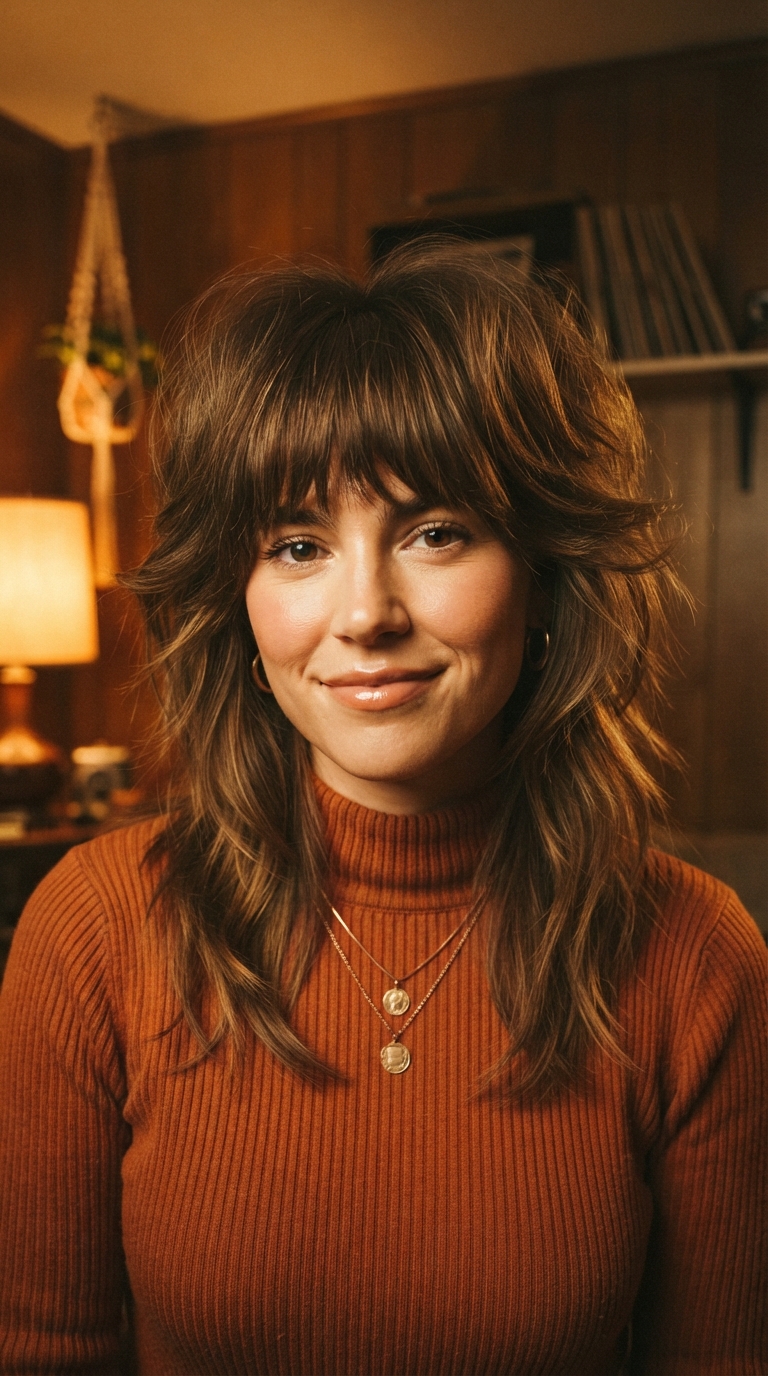
Before there was a wolf cut, a butterfly cut, or a bixie, there was the shag: feathered layers cut through the whole head, a fringe that hugs the face, and volume that looks like it happened on its own. Most of today's viral layered cuts are descendants of this one haircut, which is exactly why it never stays out of rotation for long.
This guide covers where the shag actually came from, how the modern version differs from the 1970s original, who it suits, and what the upkeep really looks like. If you want to skip straight to seeing it on yourself, the Shag preset on FaceStyle.fun matches this cut directly.
Key Takeaways
- The shag was created by New York barber Paul McGregor, who cut it for Jane Fonda — her 1971 role in Klute made it famous (Hershesons; Dazed).
- Unlike most heavily layered cuts, the shag is actively recommended for fine hair, since the layering removes the weight that makes fine hair fall flat (NYLON).
- A well-cut shag holds its shape for 8-12 weeks between trims, longer than most layered styles (Marie Claire).
- The wolf cut is essentially a shag blended with a mullet — the shag keeps its layers evenly feathered and connected rather than choppy and disconnected (PureWow; Marie Claire).
What Is a Shag Haircut, Exactly?
A shag is defined by layers cut throughout the entire head — not concentrated at the crown or the face, but feathered evenly from top to ends — usually paired with a fringe and finished so the ends look soft and piecey rather than blunt. The result is a cut with built-in volume at the crown and movement through the lengths, designed to look effortless rather than polished.
That all-over layering is what separates a shag from its famous descendants. A wolf cut chops the crown layers shorter and more disconnected; a butterfly cut concentrates its layers in two distinct zones. The shag keeps everything blended and continuous, which is why it reads as the softest of the family.
Where Did the Shag Come From?
The shag has an unusually specific origin story for a haircut. New York barber Paul McGregor, who opened his salon on St. Mark's Place in 1965, is credited with creating it — and the cut he gave Jane Fonda became famous through her Oscar-winning role as Bree Daniels in the 1971 film Klute (Hershesons, "70s Style: The Shag Haircut"; Dazed). Early adopters included Warren Beatty, Goldie Hawn, and Faye Dunaway.
From there it went fully mainstream through the decade's music scene — Mick Jagger, Joan Jett, David Bowie, Rod Stewart, and David Cassidy all wore versions of it — while stylist Allen Edwards' feathered take on the Charlie's Angels stars pushed a softer variation into every salon in America (Dazed). The cut resurfaced again in 1995 when Sally Hershberger created Meg Ryan's famously undone shag for French Kiss, and Hershberger has since cut the modern version on Miley Cyrus (Dazed).
How Is the Modern Shag Different From the '70s Original?
The structure hasn't changed much — what's changed is the finish and the upkeep philosophy. Today's stylists cut shags to be deliberately low-maintenance: a well-executed razor cut "softens naturally as it grows in, so the haircut keeps looking intentional for longer," and many clients maintain the shape between appointments with nothing more than an occasional fringe trim (Marie Claire, "Shag Haircuts Are the Low-Maintenance, Air Dry-Friendly Hairstyle of the Summer", 2026).
The modern version also tends to be softer and less literal than the heavy '70s silhouette: less fringe density, more face-framing, and layers tuned to the wearer's texture rather than one uniform template. Miley Cyrus, Zendaya, Taylor Swift, Billie Eilish, and Chloë Grace Moretz have all worn contemporary shags, each cut noticeably differently (Dazed; NYLON) — which is the point. As Jayne Matthews of Edo Salon puts it, "The best thing about the shag is how it can be tailored to each individual face" (Dazed).
Does a Shag Suit Your Face Shape?
Because the layers can be tailored, most face shapes have a shag variation that works. L'Oréal Paris' styling guide breaks it down by shape: oval faces "can pull off just about any shag hairstyle," while other shapes each have a specific adjustment that makes the cut work in their favor (L'Oréal Paris, "The Best Shaggy Haircut for Your Face Shape").
| Face shape | Best shag approach |
|---|---|
| Oval | Nearly any shag variation works — length and fringe are a matter of preference |
| Round | A shaggy lob cut longer in the front helps elongate the face |
| Square | Face-framing layers soften the jawline |
| Heart | Long, piecey bangs soften a wider forehead |
| Diamond | A center-parted shag visually lengthens the face |
Not sure which shape you're working with? FaceStyle.fun's face shape guide walks through a two-minute way to check before you book.
Which Hair Types Suit a Shag?
Here's where the shag breaks from most of its layered descendants: it's one of the few heavily layered cuts stylists actively recommend for fine hair. "I would absolutely recommend a shag to anyone with fine hair," says Brooklyn hairdresser Hannah DiFolco — the layering removes the weight that makes fine hair look limp, rather than thinning it out further (NYLON, "Make The Celeb-Fave Shag Haircut Work For You").
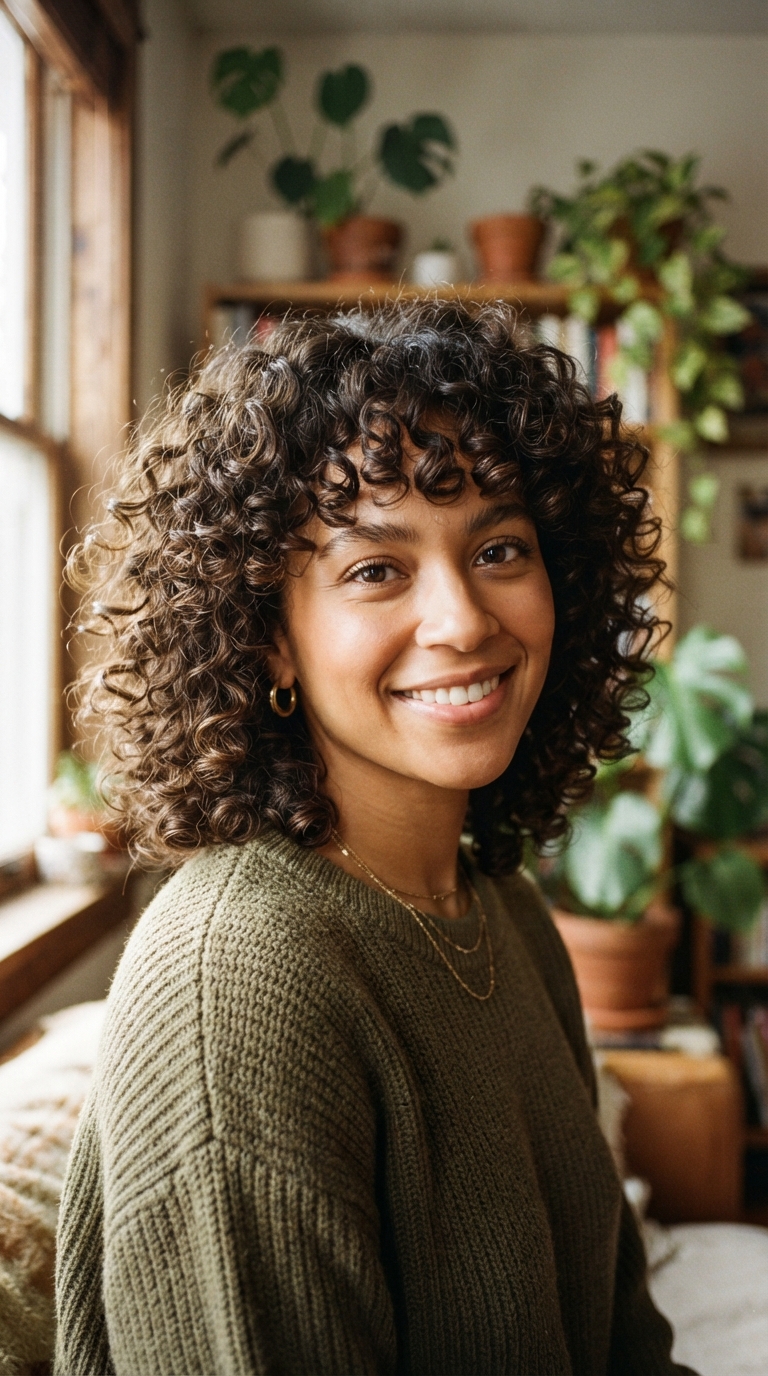
Curly hair also takes the cut well, with one important caveat: be "very clear to your stylist on where you want the shortest layer to be," advises Blake Reed Evans, a global Redken artist — curls shrink as they dry, so a layer that looks right cut wet can spring up dramatically shorter (NYLON).
| Hair type | Fit | Notes |
|---|---|---|
| Fine / thin | Excellent | Layering removes the weight that makes fine hair fall flat — a rare layered cut that helps rather than hurts |
| Straight | Excellent | Needs product to hold the piecey texture the cut is built around |
| Wavy | Excellent | Natural bend pairs easily with the feathered layers |
| Curly / coily | Excellent, with care | Specify where the shortest layer should sit — shrinkage moves it higher than you expect |
Shag vs. Wolf Cut vs. Butterfly: What's the Difference?
The wolf cut "is a playful combination of a shag and a mullet," as Amy Abramite, creative director at Chicago's Maxine Salon, describes it (Marie Claire, "27 Wolf Cut Hairstyle Ideas", 2026) — PureWow's beauty team puts it even more directly: the wolf cut "is essentially a shag haircut that's filled with wispy layers and volume" (PureWow). The butterfly cut, meanwhile, takes the shag's layering idea and splits it into two distinct zones. If you're choosing between the three, the shag is the softest and most connected of the family.
| Cut | Layer placement | Overall feel |
|---|---|---|
| Shag | Even, feathered layers through the whole head, usually with a fringe | Soft, lived-in, the most blended of the three |
| Wolf cut | Choppy, disconnected crown layers with a shorter mullet-style tail | Textured, edgier, more volume-focused |
| Butterfly cut | Short face-framing crown layers blended into long length underneath | Polished, face-framing, keeps maximum length |
How Do You Style a Shag at Home?
The modern shag is designed to be air-dry friendly, and the product routine is short: volumizing mousse at the roots for lift, then a texturizing spray through the mid-lengths and ends to bring out the piecey separation the cut is built around, a routine recommended by stylists including Adam Federico, VP of Technical Education at R+Co (Marie Claire, 2026). By hair type, NYLON's stylist panel suggests a criss-cross blow-dry with a paddle brush for straight hair, curl cream applied damp and diffused for curls, and a lightweight serum for waves.

For two more professional references before your consultation, Sam Villa — Redken's Global Artistic Ambassador — has cutting demonstrations of both the 90s-leaning shag and the '70s-inspired original on his education channel.
How Often Do You Need to Trim a Shag?
Less often than you might expect for a layered cut. "If the shape is cut right and well, it should last 8-12 weeks," says Rodger Azadganian, owner of äz Craft Luxury Haircare and founder of 8 the Salon (Marie Claire, "This Is How Often to Cut Your Hair"). That's a noticeably longer window than the wolf cut's 6-8 weeks — the shag's blended layers grow out gracefully instead of losing their shape.
| Shag situation | Recommended trim window |
|---|---|
| Well-cut shape, maintaining | 8-12 weeks |
| Curly shag | Around 8 weeks |
| With a fringe | Fringe trim every 3-4 weeks |
| Growing it out | Around 12 weeks |
How Do You Ask a Stylist for a Shag?
Reference photos matter more with a shag than with most cuts, since "shag" covers everything from soft and face-framing to full Joan Jett. NYLON's stylist panel suggests two practical routes: search Instagram for stylists in your area who post shag work specifically, or "find an older and experienced stylist who was doing hair in the '80s [and] '90s and ask for a Joan Jett haircut" (NYLON). Bring your hair type into the conversation too — where the shortest layer sits is the whole cut, especially on curls.
The fastest way to build that reference photo? Preview the cut on your own face first. FaceStyle.fun's how-to guide walks through prepping a photo and comparing the Shag and Layered Shag presets side by side.
Is a shag the same as a wolf cut?
No, but they're closely related. The wolf cut "is essentially a shag haircut that's filled with wispy layers and volume," blended with a mullet's shorter, choppier crown (PureWow; Marie Claire). A classic shag keeps its layers evenly feathered and connected from crown to ends, without the mullet-leaning disconnection.
Does a shag work on fine or thin hair?
Yes — it's one of the few heavily layered cuts stylists actively recommend for fine hair. Brooklyn hairdresser Hannah DiFolco puts it plainly: "I would absolutely recommend a shag to anyone with fine hair," since the layering removes the weight that makes fine hair fall flat (NYLON).
How often do you need to trim a shag?
A well-executed shag holds its shape longer than most layered cuts: "If the shape is cut right and well, it should last 8-12 weeks," according to salon owner Rodger Azadganian (Marie Claire). Plan on roughly every 8 weeks for curly versions, and add a quick fringe trim every 3-4 weeks if your shag includes bangs.
Who invented the shag haircut?
New York barber Paul McGregor is credited with creating the modern shag, which he cut for Jane Fonda — the style shot to fame through her role as Bree Daniels in the 1971 film Klute (Hershesons; Dazed).
Can curly hair get a shag?
Yes — curly shags are one of the most popular modern versions. The key is telling your stylist exactly where you want the shortest layer to sit, because curls shrink as they dry, so a layer cut to the right length wet can spring up much shorter (Blake Reed Evans, global Redken artist, via NYLON).
The Bottom Line
The shag has outlasted five decades of trend cycles for one reason: it's a framework, not a fixed shape. Feathered layers, a fringe, and effortless volume can be tuned to nearly any face shape and hair type — including fine hair, which most layered cuts punish. Bring reference photos, be specific about your shortest layer, and expect a generous 8-12 weeks between trims.