Butterfly Haircut: Who It Suits and Who It Doesn't
A butterfly haircut is really two haircuts stacked on top of each other: a face-framing crop happening at the crown, and a long, flowing cut happening everywhere else. That two-zone structure is exactly why it keeps getting recommended to people who want a change without actually losing their length, and exactly why it isn't universally kind to every hair type.
This guide covers what the cut actually is, who it flatters, who should ask for a softer version instead, and how it stacks up against its closest cousins, the wolf cut and the shag.
Key Takeaways
- A butterfly cut concentrates short, feathered layers at the crown and blends them into long layers underneath, distinct from a wolf cut’s choppier, more disconnected layering.
- It flatters straight and wavy hair looking for lift and movement without losing length, according to L’Oréal Paris’ styling guide.
- Fine or thin hair is the clearest mismatch: heavy layering can look sparse, so a softer, less-layered version paired with curtain bangs is the safer call.
- Expect a trim every 6 to 8 weeks to keep the crown layers defined, and credit hairstylist Sunnie Brook, who created the cut roughly 15 years before its recent resurgence.
What Is a Butterfly Haircut, Exactly?
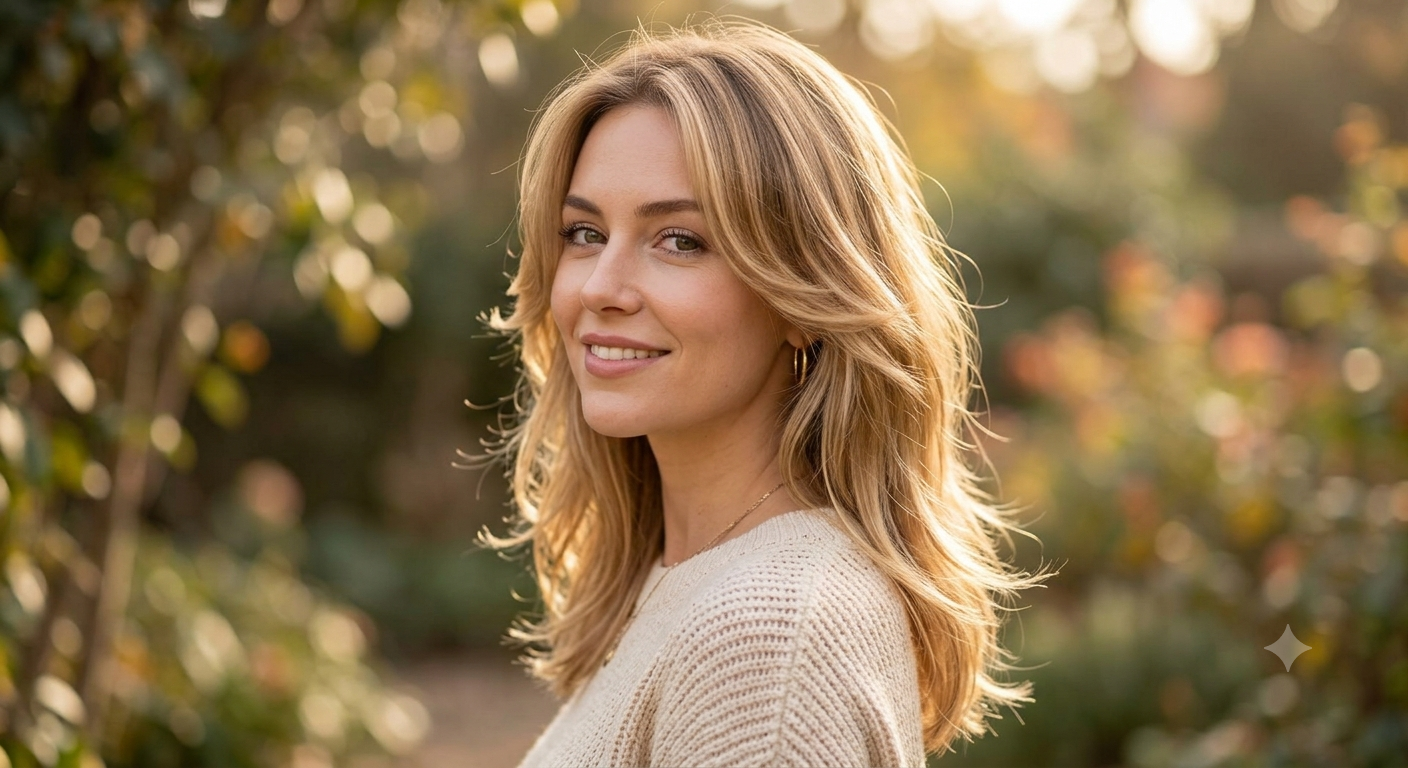
The butterfly haircut is built from two layering zones rather than one continuous taper. Shorter, feathered layers are cut around the crown and face, then blended into longer layers underneath that preserve most of the hair's original length. Celebrity hairstylist Clayton Hawkins describes it as "the best of both worlds: short, bouncy layers up top that frame the face and create volume, while the longer pieces keep that flowing length"; fellow stylist Haley Heckmann calls it a "layered, feathered style" where the shorter pieces blend into longer ends "creating movement from root to tip" (Parade, "7 Best 'Butterfly Haircut' Styles, According to Celebrity Hairstylists").
The easiest way to tell it apart from a wolf cut: a wolf cut chops the layers choppier and pairs them with a shorter, mullet-leaning tail in back; a butterfly cut keeps the blend smoother and the length long all the way through. More on that in the comparison table below.
Where Did the Butterfly Cut Come From?
The cut is widely credited to hairstylist Sunnie Brook, whose own studio site states she invented it roughly 15 years before it resurfaced as a viral trend (Sunnie Brook, official site). Google search interest in the style has doubled since, per Google Trends data cited by Marie Claire in its 2025 summer trend coverage ("Butterfly Haircuts Are Summer 2025's Hottest Hair Trend"), a jump that mirrors the same organic, TikTok-and-Pinterest-driven rediscovery pattern that brought back the wolf cut and curtain bangs.
Who Does the Butterfly Cut Actually Suit?
Straight and wavy hair is where this cut earns its reputation. L'Oréal Paris' styling guide notes the layering "can be especially flattering for straight hair, which can sometimes appear flat or heavy" ("Butterfly Haircut Ideas for All Hair Types") — the shorter crown layers add lift and separation that straight hair doesn't generate on its own.
Face-shape suitability follows the same logic used across most layered cuts: shorter layers concentrated near the crown and cheekbones add lift and visual width, which tends to help rounder or longer face shapes the same way a wolf cut or long layers do. If you're not sure where your face shape lands, FaceStyle.fun's face shape guide walks through a two-minute way to check before you book.

| Hair type | Fit | Notes |
|---|---|---|
| Straight | Excellent | Crown layers add lift and movement that straight hair doesn’t create on its own |
| Wavy | Excellent | Natural texture pairs easily with the two-zone layering |
| Curly / coily | Good, with care | Ask for the layers cut dry on your natural pattern to avoid a triangular silhouette |
| Fine / thin | Caution | Heavy layering can make strands look sparse; ask for a softer, less-layered version |
| Thick / medium density | Excellent | Holds the two-zone shape and movement well |
Who Should Ask for a Softer Version Instead?
Fine or thin hair is the clearest case for caution. L'Oréal Paris' own guidance is direct about it: "Too many layers can make strands look sparse, so a softer version of the cut is usually best for those with fine hair," recommending it be paired with curtain bangs and lighter, less-aggressive layering rather than the full heavy-layer treatment.
Very short hair is the other practical mismatch. The whole point of the cut is the contrast between the shorter crown zone and the longer length underneath, so there needs to be enough length to blend into in the first place. And because the crown layers are the shortest, fastest-growing part of the cut, it needs a steady trim schedule to stay defined rather than growing out into a shapeless halo, more on that below.

Butterfly Cut vs. Wolf Cut vs. Shag: What’s the Difference?
All three cuts use layering to add movement, but they distribute it differently. The butterfly cut concentrates shorter, feathered layers at the crown and blends them into long layers underneath, keeping the overall silhouette smooth. The wolf cut chops those layers choppier and pairs them with a shorter, mullet-leaning tail in back, leaning into texture and edge over softness. The shag spreads heavier, more uniform texturizing evenly through the whole length rather than concentrating it in two zones.
| Cut | Layer placement | Overall feel |
|---|---|---|
| Butterfly cut | Short face-framing crown layers blended into long length underneath | Soft, face-framing, movement without losing length |
| Wolf cut | Choppy, disconnected crown layers with a shorter mullet-style tail | Textured, edgier, more volume-focused |
| Shag | Even, all-over texturizing layers with no two-zone contrast | Loose, uniformly feathered, softest of the three |
How Do You Style a Butterfly Cut at Home?
Daily styling leans on the same tools as most layered cuts: a round brush and blow dryer to lift the crown layers away from the face, or a diffuser on wavy and curly textures to keep the natural pattern intact. A light volumizing mousse at the roots helps the shorter layers hold their separation instead of falling flat against the longer hair underneath.
For a look at how the cut turns out across different real hair types and skill levels, Brad Mondo's reaction breakdown of at-home attempts is also worth a watch (Hairdresser Reacts To INSANE At-Home Butterfly Cuts).
How Often Do You Need to Trim a Butterfly Cut?
Because the crown layers are the shortest part of the cut, they grow out visibly faster than the length underneath. Luxy Hair's styling guide puts softer, longer layered cuts at a 6-to-8-week trim window to keep the shape defined ("How Often Should You Cut Your Hair"), the same range recommended for long wolf cuts, though noticeably less frequent than the 3-to-4-week window curtain bangs need.
| Cut | Recommended trim window |
|---|---|
| Butterfly cut | 6-8 weeks |
| Curtain bangs | 3-4 weeks |
| Short wolf cut | 6-8 weeks |
| Long wolf cut | 8-10 weeks |
A Growing Service, and a Growing Trend
Interest in the cut isn't just anecdotal. Google search volume for "butterfly haircut" has doubled, per Google Trends data cited by Marie Claire, and it's landing at a moment when the underlying service itself is expanding: the U.S. Bureau of Labor Statistics projects 5% employment growth for barbers, hairstylists, and cosmetologists between 2024 and 2034, versus 3% average growth across all occupations, with roughly 84,200 annual job openings and a workforce of about 575,200 people already in the role as of 2024 (BLS Occupational Outlook Handbook). The broader U.S. hair salon industry was valued at roughly $60 billion in 2025 (IBISWorld data, cited by Boulevard's 2026 industry report).
Is a butterfly haircut the same as a wolf cut?
No. Both use heavy layering, but a butterfly cut concentrates short, feathered layers at the crown and blends them into long layers underneath, keeping the shape smooth and length-preserving. A wolf cut chops those layers choppier and pairs them with a shorter, mullet-leaning tail in back, leaning into texture and edge rather than softness.
Does a butterfly cut work on fine or thin hair?
It can look sparse if it's cut too heavily. L'Oréal Paris' styling guide recommends a softer version with fewer, lighter layers, paired with curtain bangs instead of a full heavy-layer treatment, for anyone with fine or thin hair.
How often do you need to trim a butterfly cut?
Every 6 to 8 weeks, the same window recommended for other softly layered, long cuts, according to Luxy Hair's styling guide. The crown layers are the shortest part of the cut, so they grow out and lose definition faster than the length underneath.
Who invented the butterfly haircut?
Hairstylist Sunnie Brook is widely credited as the cut's creator, stating on her own studio site that she developed it roughly 15 years before it resurfaced as a viral trend.
Can curly or coily hair get a butterfly cut?
Yes, but it needs a stylist experienced with curl patterns. Cutting the layers dry, on the hair's natural curl, helps avoid the triangular silhouette that heavy layering can sometimes create on curlier textures.
The Bottom Line
The butterfly cut earns its popularity by doing something narrower trends don't: it changes how a haircut moves without asking you to give up length. It's a strong pick for straight and wavy hair looking for lift, worth a softer conversation if your hair is fine or thin, and worth bringing reference photos, and your hair type, not just a face shape, to your next consultation.