Curtain Bangs: The Complete Guide to Styling, Face Shapes & Maintenance
Curtain bangs are one of the most enduring fringe styles in modern hairstyling, resurfacing again and again since their Bardot-era origins because the shape can be tailored to almost any face. Stylists still report them as one of the most consistently requested fringe cuts, most recently designing them to blend more seamlessly into the rest of the haircut for an easier grow-out (Who What Wear, "Bangs, Baby: Your Official 2026 Fringe Report", 2026).
If you're deciding whether to get them cut, this guide covers who they suit, how to style them, and what the upkeep actually looks like.
Key Takeaways
- Curtain bangs are one of the most consistently requested fringe cuts because their length and sweep can be tailored to nearly any face shape (Who What Wear, 2026).
- Most stylists recommend a trim every 3-4 weeks; curly hair can often stretch to 6-8 weeks (The Zoe Report, 2025; Carol’s Daughter, 2026).
- Oval faces suit nearly any curtain-bang length; round, square, and heart shapes each have a specific length and part that works best (Davines, 2026).
- Curtain bangs typically take 3-6 months to fully grow out and blend, versus a more abrupt in-between stage for blunt bangs (Makeup.com by L’Oréal).
What Are Curtain Bangs, Exactly?
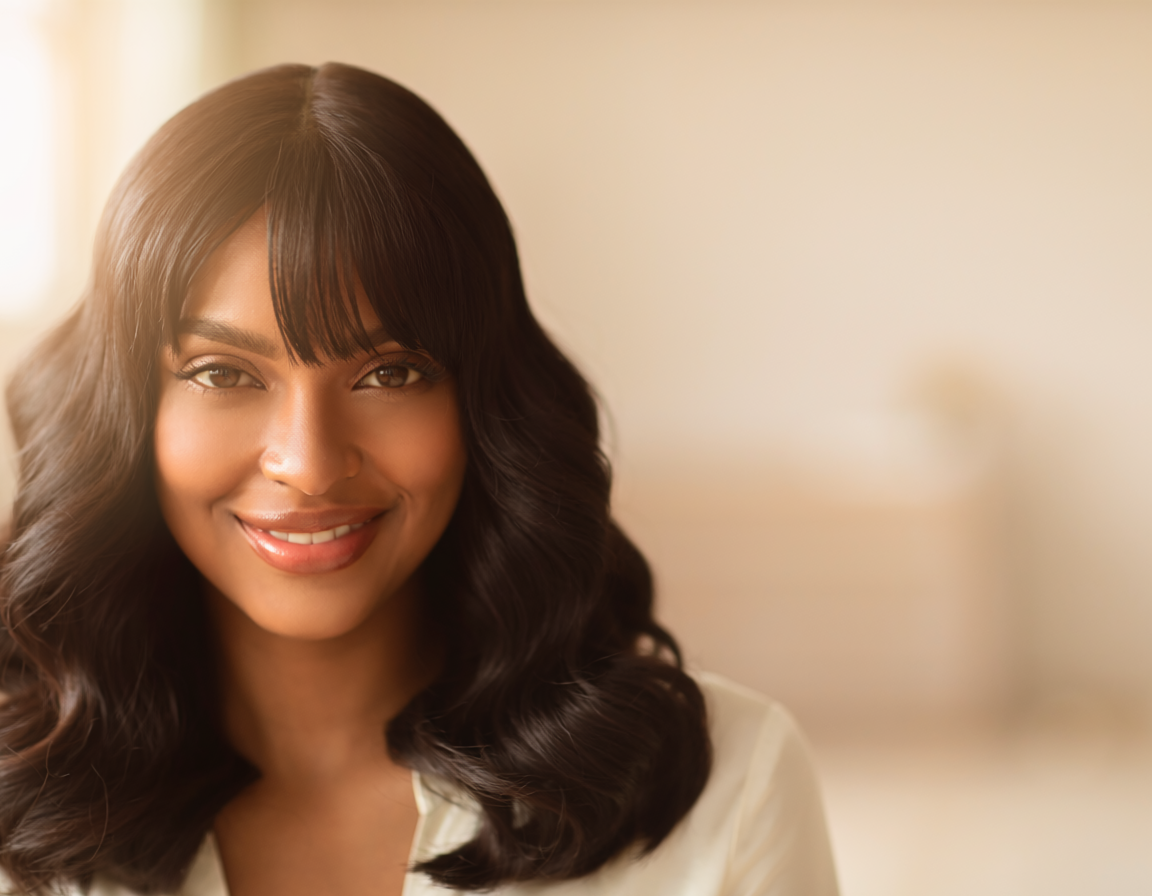
Curtain bangs are a center-parted fringe that sweeps outward on both sides, blending into the rest of the hair rather than sitting as a separate blunt block. Unlike blunt bangs, which are cut straight across in one dense line, curtain bangs are layered and longer at the outer edges, so they "part" like a curtain around the face, hence the name.
That structural difference is also why curtain bangs read as more low-commitment than other fringe styles to a lot of first-timers. You're not locked into a single blunt line that needs constant maintenance to look intentional. The layering does a lot of the forgiving work as the cut grows.
Do Curtain Bangs Suit Your Face Shape?
According to Davines’ styling guide, oval faces are the most versatile match for curtain bangs, while round, square, and heart-shaped faces each need a specific length and sweep to work in their favor (Davines, "The Ultimate Guide to Curtain Bangs", 2026). Celebrity stylist Mark Townsend and Nine Zero One Salon’s Lisa Satorn both point to length and placement, not face shape alone, as the real deciding factor.
| Face shape | Best curtain-bang approach |
|---|---|
| Oval | Most versatile match — nearly any length works well |
| Round | Go longer, cheekbone-grazing, for a slimming, elongating effect |
| Square | Longer, side-swept strands soften angles; skip anything blunt or thick |
| Heart | Start bangs below the brow and sweep outward to balance a wider forehead |
Which Hair Types Suit Curtain Bangs?
Curtain bangs work on straight, wavy, and curly textures, but the cutting technique changes with each. For curly hair specifically, stylists cut the bangs dry, following the natural curl pattern, and leave them longer than the desired finished look to account for shrinkage as the curl springs up (Carol’s Daughter, "How to Style Curtain Bangs for Curly Hair", updated 2026).

How Do You Style Curtain Bangs at Home?
The standard at-home method uses a round brush and a blow dryer: section the bangs from the crown, and dry each side outward and slightly down and under, away from the face, using medium heat. Most stylists suggest finishing with a small amount of lightweight cream or oil on the ends only, to avoid weighing the roots down.

How Often Do You Need to Trim Curtain Bangs?
Most stylists recommend a trim every 3 to 4 weeks to hold the shape, according to hairstylist Nick Stenson (The Zoe Report, "2026 Hair Trends", December 2025). Curly-haired clients often stretch that window to 6-8 weeks, since curl pattern camouflages growth for longer (Carol’s Daughter, 2026).
How Do You Grow Out Curtain Bangs Without the Awkward Phase?
Curtain bangs typically take 3 to 6 months to grow out and blend fully into the surrounding layers, which is a noticeably smoother transition than the abrupt in-between stage blunt bangs go through (Makeup.com by L’Oréal, "How to Grow Out Curtain Bangs"). The layered, center-parted structure is doing the same forgiving work here that it does when the cut is fresh.
Why Do Curtain Bangs Keep Coming Back?
Celebrity styling is a big part of why curtain bangs keep resurfacing across hairstyling cycles — Sabrina Carpenter’s Bardot-inspired curtain fringe, reportedly cut by longtime hairstylist Laurie Heaps, and Camila Cabello’s center-parted, feathered curtain bangs have both been cited as reference photos stylists see repeatedly in consultations (BehindTheChair.com, 2025). Celebrity stylist Pamela Neal named curtain bangs among the top three bang styles stylists were backing most recently, alongside curly and shaggy bangs (NewBeauty, "3 Bang Trends Celebrity Hairstylists Are Backing Right Now", January 2026).
What tends to shift over time isn’t the shape itself, it’s the cutting philosophy. Stylists increasingly integrate curtain bangs into the base haircut specifically to reduce grow-out friction, rather than treating the fringe as a separate element (Who What Wear, 2026).
Getting a precise, face-shape-matched cut from a professional stylist is worth it over a DIY attempt, especially for a first cut. The U.S. hairstyling workforce itself is growing to meet that kind of demand: the Bureau of Labor Statistics projects 5% employment growth for barbers, hairstylists, and cosmetologists between 2024 and 2034, with roughly 84,200 annual job openings.
Do curtain bangs work for every face shape?
Curtain bangs work on most face shapes because the center part and outward sweep are adjustable. Oval faces suit almost any length, round faces do best with longer, cheekbone-grazing pieces, square faces benefit from longer side-swept strands, and heart shapes look best when the bangs start below the brow (Davines, 2026).
How often do you need to trim curtain bangs?
Most stylists recommend a trim every 3 to 4 weeks to keep the face-framing shape, according to hairstylist Nick Stenson (The Zoe Report, 2025). Curly-haired clients can often stretch that to every 6 to 8 weeks since curl pattern hides growth longer (Carol’s Daughter, 2026).
Can curly or wavy hair get curtain bangs?
Yes. Curtain bangs work on straight, wavy, and curly textures, but curly hair should be cut dry, on its natural curl pattern, and slightly longer than the desired finished length to account for shrinkage (Carol’s Daughter, 2026).
How long does it take to grow out curtain bangs?
Curtain bangs typically take 3 to 6 months to blend into the surrounding layers, compared with a more noticeable in-between stage for blunt bangs (Makeup.com by L’Oréal reference guide).
Are curtain bangs a trend or a lasting style?
Curtain bangs have resurfaced repeatedly since their Bardot-era origins and remain one of the most consistently requested fringe cuts, because the center-parted, outward-swept shape can be tailored to nearly any face shape (Who What Wear, 2026).
The Bottom Line
Curtain bangs earn their staying power because the same structure that makes them flattering — a center part, graduated length, outward sweep — is what makes them forgiving as they grow out. Bring a couple of reference photos to your next salon visit, mention your face shape and hair type, and expect a trim every 3 to 8 weeks depending on your texture.