Job Interview Hairstyles: Safe vs. Statement Looks
Ask ten people what counts as a "safe" interview hairstyle and most will say some version of the same thing: pulled back, neat, nothing loud. Ask why, and the answers get vaguer. Usually it's a guess about what recruiters want, or a script picked up secondhand from a friend who got a callback once. For a lot of candidates, the honest answer is more specific than a styling preference, and more consequential.
According to the 2023 CROWN Workplace Research Study, commissioned by Dove and LinkedIn (2,990 employed women surveyed across the US), Black women's hair is rated 2.5 times more likely to be perceived as unprofessional than white women's hair. 66% say they've changed their hairstyle for a job interview, and 41% of those switched from curly to straight (CROWN Act, 2023).
That's not a "which bun looks best" question. It's a bias problem the styling world has spent years quietly working around, worth naming before getting into the actual style options.
This guide draws on named, credentialed sources throughout — a workplace research study, an employer survey, and stylists who work with this exact problem daily — rather than the recycled "most searched hairstyle" claims that circulate on hair-content sites with no traceable source. More on how FaceStyle.fun approaches guides like this one is on our About page.
Key Takeaways
- 66% of Black women say they've changed their hairstyle for a job interview, and 41% of those switched from curly to straight (CROWN Act, 2023 CROWN Workplace Research Study, Dove/LinkedIn).
- Grooming-based promotion bias swings by industry: 41% overall in a CareerBuilder survey of 2,765 employers, rising to 55% in financial services and dropping to 37% in IT (CareerBuilder, 2008 — dated, but still the most specific industry-by-industry breakdown available on this question).
- Curly hair "is professional, formal, and beautiful" for an interview — Carolina Contreras, founder of Miss Rizos Salon: "Hair doesn't define how good you're going to be at your job."
- Stylist advice is consistent on one point: "the day of a job interview is not the time to experiment with a new hairstyle" (Capitol Hill Style) — test any new look before you need it for real.
Why 'Safe' Hair Advice Exists in the First Place
The same CROWN study goes further than the headline number. Black women are 54% more likely to feel they must wear straight hair to a job interview to succeed, and women with coily or textured hair report workplace microaggressions at twice the rate of those with straighter hair.
More than 1 in 4 Black women believe they've been turned down for a job or an interview because of their hair — a figure that rises to 1 in 3 among women under 34 (CROWN Act, 2023). Separately, more than 20% of Black women aged 25-34 say they've been sent home from work over their hair.
This guide's "safe" recommendations describe neatness and control — hair pulled back, intentional, and off the face — not a specific texture. Curly or coily hair styled neatly is exactly as interview-safe as straight hair styled neatly. The data above describes a bias problem some interviewers still carry, not a style requirement anyone actually has to meet.
Does It Actually Depend on the Industry?
It does, by more than most people assume walking in. CareerBuilder's survey of 2,765 U.S. employers found 41% believe more professionally groomed employees get promoted more often overall. That number climbs to 55% in financial services and falls to 37% in IT and 34% in manufacturing (CareerBuilder, 2008 — dated, but still the most detailed industry breakdown on this question).
A more than 20-point gap between the strictest and loosest sectors means the same hairstyle can read as perfectly normal in one interview and slightly out of place in another.
| Sector | Employers linking grooming to promotion | What that means for interview hair |
|---|---|---|
| Financial services | 55% | Default to the safest, most classic option unless told otherwise |
| All industries (average) | 41% | Neat and intentional covers most rooms |
| IT | 37% | More room for a statement look, still worth reading the office first |
| Manufacturing | 34% | Practical and low-maintenance tends to matter more than formality |
Corporette, a career-advice site written for women in corporate and legal fields, frames the real test as "know-your-office, know-your-sector... and know-your-region" rather than one fixed rule — a bolder look might be unremarkable at a creative agency and too much for a conservative finance office in the same city.
What Counts as 'Safe' Interview Hair
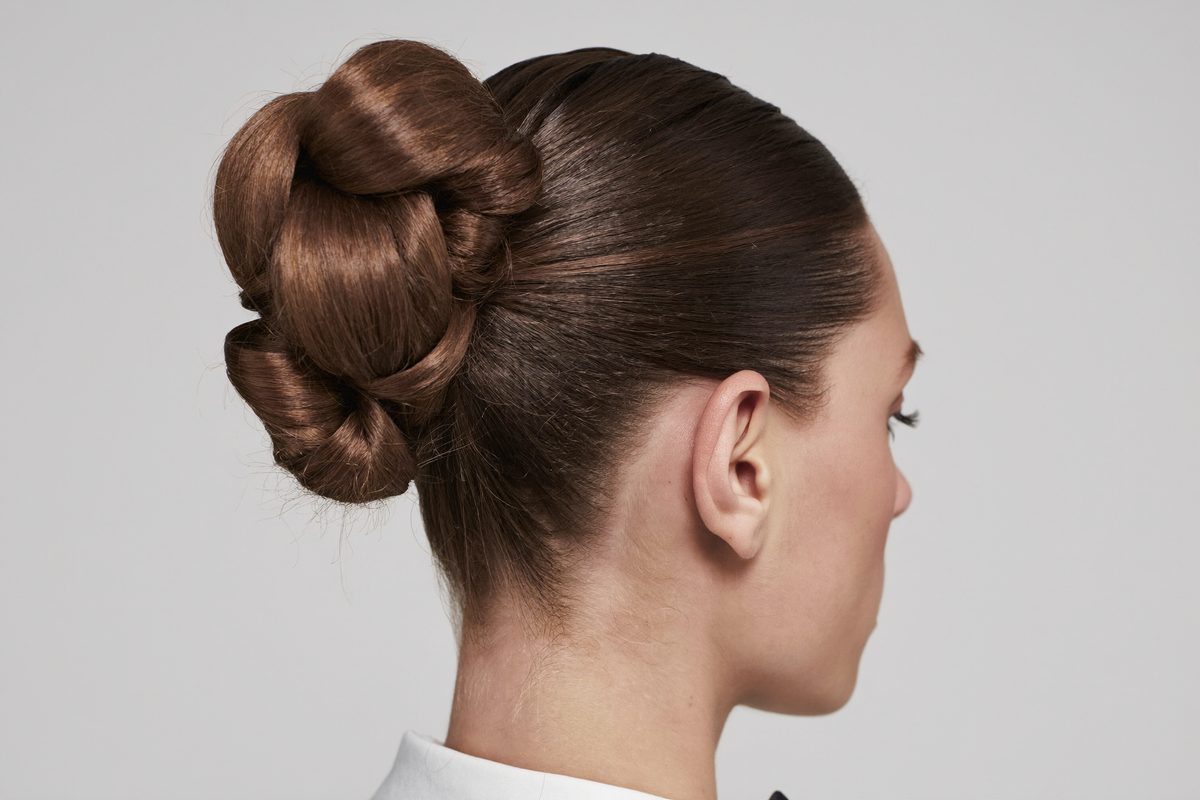
Dhiran Mistry, a stylist at John Barrett Salon inside Bergdorf Goodman, demonstrates the corporate-interview default as hair pinned back loosely enough to keep the whole face visible — not scraped tight, just controlled. A low bun, a simple chignon, or a low ponytail all do that job. FaceStyle.fun's Simple Chignon preset and Low Ponytail preset preview both on your own face before you commit to either for the real interview.
Where you part it and how tightly you pull it back can matter more than which of the three you pick — see FaceStyle.fun's face shape guide if you want a starting point tailored to your own proportions rather than a one-size-fits-all bun.
None of these require a salon trip to get right, either. A low bun or ponytail is one of the more forgiving styles to do on yourself, which is part of why it's the default recommendation across nearly every source in this guide — reliable results without depending on someone else's schedule the morning of.
Curly and Textured Hair: What 'Professional' Actually Means
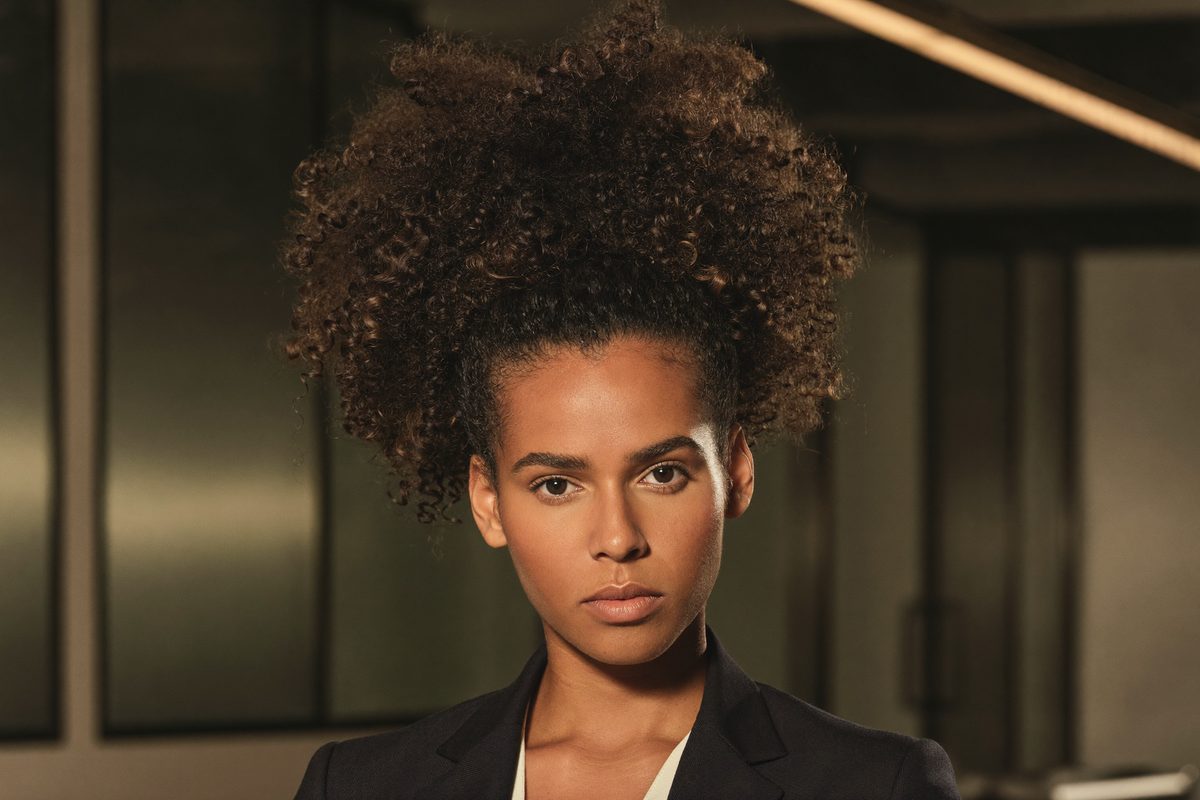
"Safe" gets misread as "straight" often enough that it's worth stating plainly: it isn't. Carolina Contreras, founder of Miss Rizos Salon, says curly hair "is professional, formal, and beautiful" for a job interview — the goal is keeping hair off the face for eye contact, the same goal a low bun or ponytail serves on straight hair. Her framing cuts through the anxiety directly: "Hair doesn't define how good you're going to be at your job."
In practice, that means a curly high bun, a pulled-back twist-out, or curls gathered into a low ponytail all meet the same bar a straight chignon does — neat, controlled, off the face. Nothing about switching from your natural curl pattern is a prerequisite for looking prepared.
When a Statement Look Is Actually Fine
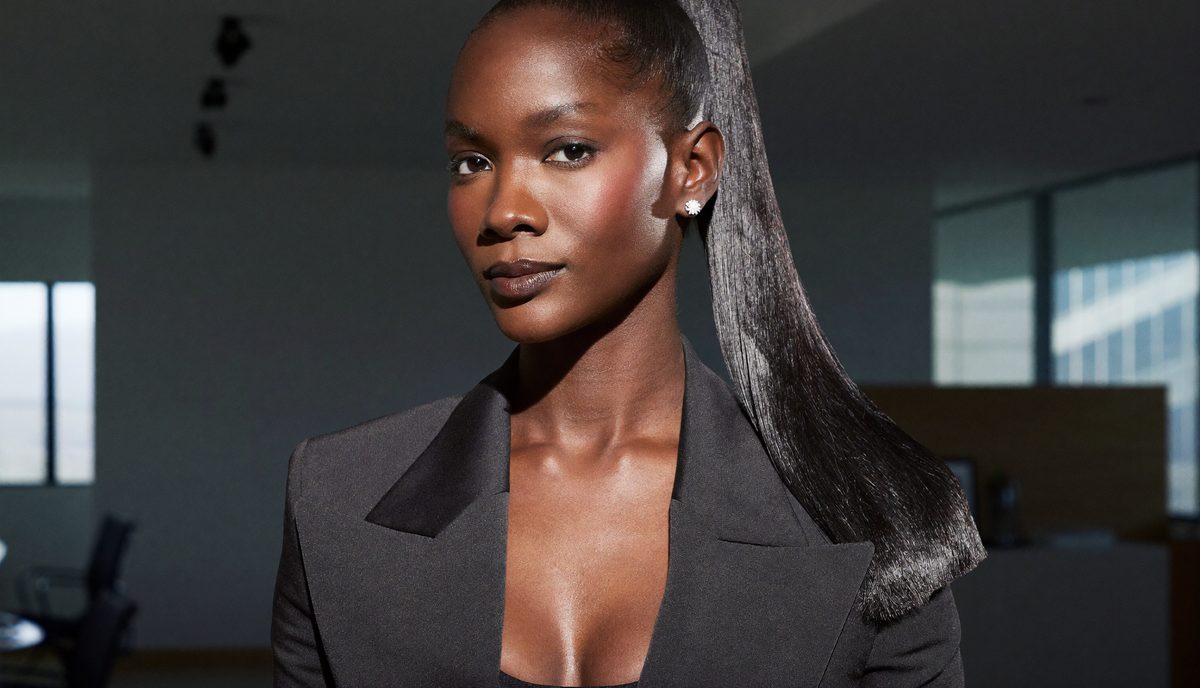
A statement look reads as a personal style choice, not a risk, when it's still precise. A sharp side part, a braided crown, or a high ponytail with a clean finish signals the same control as a bun without disappearing into it.
Corporette's readers describe that kind of look as fine at a creative agency or startup, and worth reconsidering at a conservative finance or law office. FaceStyle.fun's Braided Crown preset and French Twist preset preview two ways to do polished without going fully plain.
Hair color is the one variable worth its own gut-check. A UK survey of 1,000 hiring managers (Greene King via OnePoll, 2020) found 30% said hair color put them off a candidate — a different question from that same survey's 51% headline stat on appearance bias overall. Read it as a directional PR-survey number, not a rigorous study. For a first interview at a company whose culture you don't know yet, closer to your natural tone is the lower-risk default.
The One Rule Every Stylist Agrees On
Capitol Hill Style's advice column puts it bluntly: "the day of a job interview is not the time to experiment with a new hairstyle." Indeed's career advice team says the same thing in more formal terms: "avoid drastic style changes immediately before your interview." Every stylist and career resource quoted here agrees on the same underlying point even when they disagree on specifics. Wear whatever you choose somewhere low-stakes first.
A new updo that feels secure in the mirror can loosen by hour two; a bold color that looked right under salon lighting can read differently under office fluorescents. Testing a look on your own photo first, privately, does the same job without the trial run in public.
Two more worth bookmarking: Luxy Hair's "5 Hairstyles for Work in 90 Seconds" (3M+ subscribers) covers quick, low-effort professional options, and RachhLoves' "Job Interview Ponytail Tutorial" for All Things Hair walks through the sleek-ponytail version step by step.
Is it true that recruiters judge candidates based on their hair?
For some candidates, yes, and the data is specific about who. In the [2023 CROWN Workplace Research Study](https://www.thecrownact.com/research-studies) (Dove and LinkedIn, 2,990 employed women surveyed), Black women's hair was rated 2.5 times more likely to be seen as "unprofessional" than white women's hair, and 66% said they've changed their hairstyle specifically for a job interview — 41% of those switching from curly to straight. A separate, dated but still detailed [2008 CareerBuilder survey](https://press.careerbuilder.com/2008-06-17-Forty-One-Percent-of-U-S-Employers-More-Likely-to-Promote-Employees-Who-Wear-Professional-Attire-Reveals-CareerBuilder-com-Survey) of 2,765 U.S. employers found 41% link better grooming to faster promotion, confirming the bias isn't limited to one group even if it lands hardest on textured hair. Neither statistic is a reason to change your natural texture — see the next question.
Does what counts as 'safe' interview hair change by industry?
Yes, by a wide margin. That same 2008 CareerBuilder survey found grooming-based promotion bias rose to 55% in financial services and dropped to 37% in IT and 34% in manufacturing — more than a 20-point swing depending on the sector. [Corporette](https://corporette.com/is-ombre-hair-professional/), a site written for women in corporate and legal careers, frames the real test as "know-your-office, know-your-sector... and know-your-region," not a single universal rulebook. When in doubt before a first interview at an unfamiliar company, default to the more conservative end of that sector's range — you can always loosen up once you've seen the office in person.
Should I straighten my curly or coily hair for a job interview?
No — and stylists who work with textured hair are direct about this. [Carolina Contreras](https://www.mercedessanchez.com/curly-hair-interview/), founder of Miss Rizos Salon, says curly hair "is professional, formal, and beautiful" for an interview, and that the actual goal is keeping hair off the face for eye contact, not changing its texture: "Hair doesn't define how good you're going to be at your job." "Safe" means neat and intentional, not straight. A curly high bun or a pulled-back twist-out meets the same standard a straight chignon does, without requiring heat styling you wouldn't otherwise use.
Is a bright or unnatural hair color a dealbreaker for an interview?
It depends heavily on the employer, more than most people expect. A [UK survey of 1,000 hiring managers](https://studyfinds.com/survey-51-of-employers-still-judge-job-applicants-based-on-appearance/) (commissioned by Greene King via OnePoll, 2020) found 30% said hair color put them off a candidate — worth reading as a directional PR-survey number, not a rigorous academic study. That's a different question from the same survey's headline finding that 51% of employers admit to knowingly discriminating on appearance overall. For a first interview at a company whose culture you don't know yet, closer to your natural tone is the lower-risk default; if you've confirmed the office is creative or casual, that changes.
What's the single biggest hair mistake people make before an interview?
Debuting a brand-new style on interview day itself. [Capitol Hill Style](https://caphillstyle.com/capitol/2015/02/17/ask-belle-hairstyles-for-interviews.html)'s advice is blunt: "the day of a job interview is not the time to experiment with a new hairstyle," and [Indeed's career advice team](https://www.indeed.com/career-advice/interviewing/how-to-wear-hair-for-interview) echoes it: "avoid drastic style changes immediately before your interview." Test it in public first, whether that means wearing it out for a few hours or, more privately, previewing it on your own photo before committing to it for real.
The Bottom Line
"Safe" interview hair means neat, intentional, and off the face. It's not a specific texture, and it's not a euphemism for straight. "Statement" is fine once you've read the room — a creative or startup office has more room for it than a conservative finance or law firm, per employers' own reported grooming standards. Whichever direction you lean, test the look somewhere it doesn't matter yet, before the day it does. Not sure where to start? FaceStyle.fun's free face shape tool narrows the options down before you even open the gallery.