Glasses Shapes for Every Face Shape, Ranked
Most people picking out glasses fall back on one of two habits: buying whatever frame is already on the display stand at eye level, or copying whatever a friend or influencer wears. Neither has much to do with what actually suits a specific face. The frame industry has a real, if imperfectly documented, principle behind why some shapes work and others don't, and it isn't about matching your face shape to the frame shape. It's closer to the opposite.
Opticians and optical retailers consistently teach a contrast rule: a frame that introduces the shape your face is missing tends to balance proportions better than one that echoes your face's own outline. A round face gets angular frames, a square jaw gets curved ones, and so on.
No single vision-authority body has published this as a tested clinical rule (more on that gap below). It's taught with striking consistency across independent optometry practices, and it holds up well enough in practice to be worth understanding before you try anything on.
This guide covers that contrast principle by face shape. It also covers the actual research on how glasses shift perception, which turns out to be more specific and more conditional than "glasses make you look smart." Last, it covers what real purchase-behavior data says about why trying frames on your own face still beats browsing a catalog. More on how FaceStyle.fun approaches guides like this one is on our About page.
Key Takeaways
- The core rule opticians teach: pick a frame shape that contrasts with your face's dominant shape, not one that matches it — angular frames for round faces, curved frames for square jaws, and so on.
- A 2011 Swiss Journal of Psychology study (Leder, Forster & Gerger) found glasses-wearers rated more intelligent and trustworthy but slightly less attractive — except with rimless frames, which raised trust without the attractiveness dip.
- That "glasses stereotype" isn't universal: a 2022 Cureus study of 517 Jordanian college students found the reverse pattern, no-glasses photos rated higher on attractiveness, confidence, and intelligence.
- The Vision Council reports 85% of prescription eyeglasses are still bought in person, not online — frame shape is genuinely hard to judge without seeing it on your own face first.
The Principle Every Optician Teaches: Contrast, Not Matching
Proportion drives the contrast rule, not decoration. A round face is wide and soft, with few sharp lines. An angular frame — a wayfarer, a geometric hexagon, a browline shape — adds definition the face doesn't otherwise have, which reads as more structured, not rounder-on-rounder.
Since a square jaw is already strong and angular, a curved or oval frame softens that line instead of doubling down on it. The same logic runs through every pairing in the table below: introduce whatever geometry is currently missing.
Worth being upfront about: I couldn't find a single Tier-1 vision-authority source that publishes this contrast principle as a tested rule. Neither the American Academy of Ophthalmology nor the American Optometric Association covers it — the AAO's own glasses guidance sticks to lens and frame materials, not face-shape matching. What's real is a strong, consistent practitioner consensus across independent optical practices, which is a meaningfully weaker kind of evidence than a clinical study. Use it as a well-tested starting point, not a law.
Find Your Face Shape in Under 2 Minutes
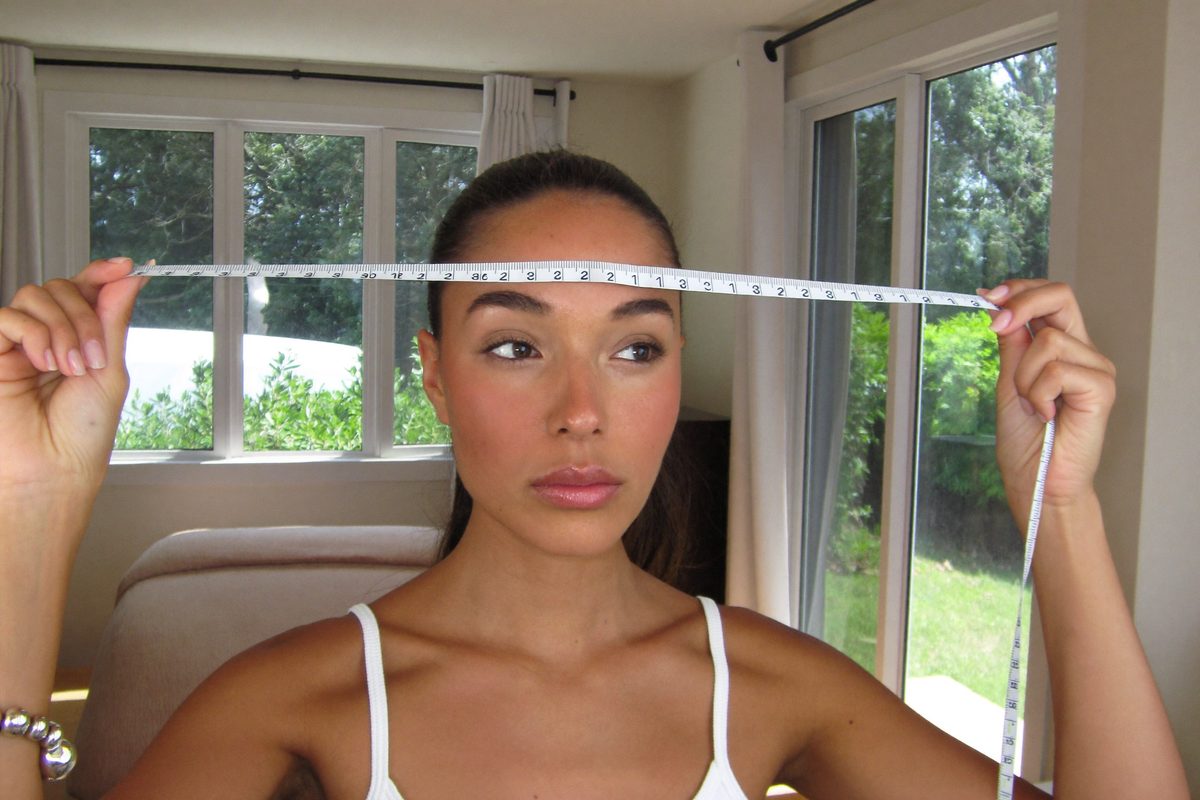
Pull your hair back and face a mirror or camera straight-on in even lighting. Then compare four measurements: face length (hairline to chin tip), forehead width at its widest point, cheekbone width at its widest point, and jaw width from ear to chin, doubled. Whichever proportion stands out most tells you your dominant shape. A forehead noticeably wider than your jaw points toward heart; roughly equal width and length points toward round or square, depending on how sharp your jawline is.
Not in the mood for a ruler in the mirror? FaceStyle.fun's free face shape detector does the same comparison from a single photo. The site's full face-shape guide covers the method in more depth, including the hairstyle side of the same logic.
Best Glasses Shapes, Ranked by Face Shape
Here's the contrast principle applied to all six face shapes, ranked from the frame styles that work hardest for that shape to the ones worth approaching more carefully.
| Face shape | Best frame shapes (ranked) | Approach carefully |
|---|---|---|
| Oval | Almost anything — [aviators](/), [wayfarers](/), round, geometric | Oversized frames that overwhelm balanced proportions |
| Round | [Wayfarers](/), rectangular, [browline/clubmaster](/), geometric | Round or small circular frames that echo the face's own curve |
| Square | [Round](/), oval, [cat-eye](/), rimless | Boxy, sharp-angled frames that repeat the jawline |
| Heart | [Cat-eye](/), bottom-heavy or rimless, light-colored round | Heavy top-weighted or [aviator](/)-style frames that add forehead width |
| Diamond | Oval, [cat-eye](/), browline with detailing at the brow | Narrow, cheekbone-hugging frames with no visual width at the temples |
| Oblong | Oversized, decorative or patterned temples, [round](/) frames | Small, narrow frames that stretch the face further vertically |
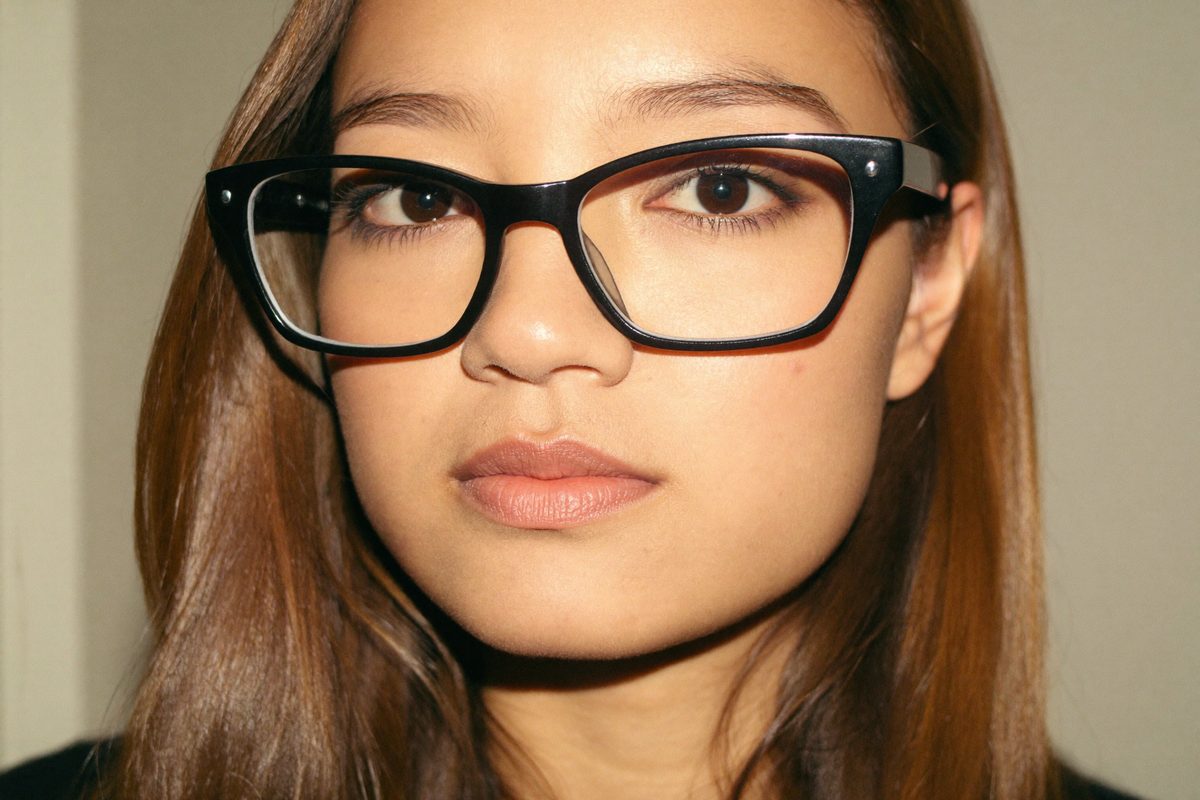
The heart-shaped and diamond rows get the most questions, since both involve a narrower lower half of the face. Cat-eye frames work for both because the upward sweep at the outer corner draws the eye toward the cheekbones instead of the forehead or temples, which is the opposite job a bottom-heavy frame would do on a round or oval face.
Does Wearing Glasses Actually Change How You're Perceived?
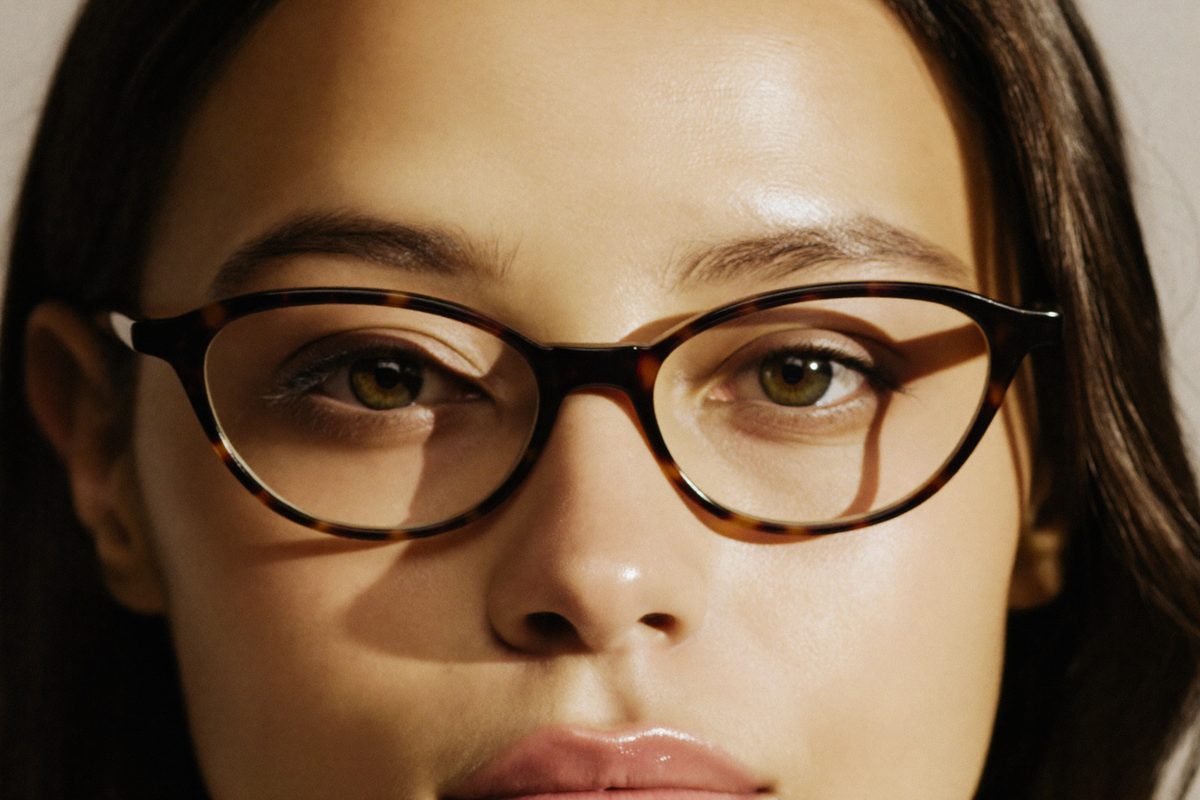
This is the part of the topic with genuine peer-reviewed research behind it, not just trade advice. A four-experiment study published in the Swiss Journal of Psychology (Leder, Forster & Gerger, 2011) had participants rate photographed faces with and without glasses on intelligence, trustworthiness, and attractiveness. Participants consistently rated glasses-wearers as more intelligent and more trustworthy, but also slightly less attractive — with one exception. Rimless frames raised the trustworthiness rating without the attractiveness penalty that came with full-rim frames.
That's a more specific finding than the popular "glasses make you look smart" shorthand suggests: it's frame-style-dependent, not a blanket effect, and it says nothing about which face shape suits which frame shape.
The "smart glasses" stereotype isn't universal, either. A 2022 study in the journal Cureus surveyed 517 Jordanian college students and found the reverse pattern. Students rated photos without glasses significantly higher on attractiveness, confidence, and intelligence than the same photos with glasses. Perception research on glasses comes almost entirely from Western samples — treat any single study's finding as culturally conditional, not a universal rule about how you'll be perceived.
Why Trying Frames On Beats Browsing a Catalog
The Vision Council's Focused inSights 2024 research surveyed more than 121,000 U.S. adults. It found that 85% of prescription eyeglasses, 79% of non-prescription reading glasses, and 77% of non-prescription sunglasses are still purchased in person. That gap has stayed wide even as most other retail categories have shifted online. The reason is straightforward: frame shape reads very differently on a model's face in a product photo than it does on your own.
A separate Vision Council survey (Morning Consult, 2,200 U.S. adults) found online shoppers actually lean toward bolder shapes than in-person shoppers. They favor square, browline, and cat-eye frames, while multi-pair owners gravitate toward curvier styles like oval, cat-eye, and round. People are willing to be more adventurous shopping online; they just have less confidence doing it without seeing the shape on their own face first. That's the exact gap a photo-based preview closes without a store trip.
Two more worth a watch. Optician-training channel Laramy-K Optical's "Frame Size and Shape Matter, But YOU Matter More!" covers the trade-professional side of frame fitting. Aaron Marino's "TOP 3 Eyewear Buying Tips" (alpha m., 6M+ subscribers) adds practical guidance on matching frame color to skin tone alongside shape.
Is the "opposite shape" glasses rule actually backed by research, or is it just a stylist myth?
It's honestly somewhere in between. No single vision-authority body publishes a lab-tested rule for it — the American Academy of Ophthalmology's own glasses guidance covers lens and frame materials, not face-shape matching. What exists is a strong practitioner consensus: independent optometry and optician practices ([Aurora Optometric Group](https://aogpc.com/2022/05/26/face-shape-and-glasses-frames/), [Eye Vision Associates](https://www.eyevisionassociates.com/products/choosing-frames-to-suit-your-face/), [Poudre Valley Eyecare](https://www.poudrevalleyeyecare.com/blog/frame-fit-guide-find-perfect-eyeglasses-for-your-face-shape/), among others) all teach the same contrast principle. Treat it as trade-taught, widely-agreed guidance, not a scientifically proven law. That's also why it's worth trying a shape on your own face before buying, rather than following the rule blind.
Do glasses actually make people see you as smarter or more trustworthy?
There's real peer-reviewed evidence for it, with a caveat. A 2011 four-experiment study in the Swiss Journal of Psychology (Leder, Forster & Gerger) rated glasses-wearers as more intelligent and trustworthy, but slightly less attractive. Rimless frames were the exception, raising trustworthiness without that attractiveness dip. The effect flips somewhere else in the world, though: 517 Jordanian college students in a 2022 Cureus study rated the same faces as more attractive, confident, and intelligent without glasses. Culture and audience shape the effect as much as frame choice does.
What's the fastest way to figure out my face shape before I go glasses shopping?
Pull your hair back, face a mirror or camera straight-on in even light, then compare four measurements: face length (hairline to chin), forehead width, cheekbone width, and jaw width. Whichever proportion stands out tells you your shape in under two minutes. FaceStyle.fun's [free face shape detector](/face-shape-detector) does the same comparison from a photo if you'd rather skip the tape measure.
Should I buy glasses online or try them on in person?
In person, by a wide margin. The Vision Council's Focused inSights 2024 survey found 85% of prescription eyeglasses, 79% of reading glasses, and 77% of sunglasses are bought in-store rather than online. Frame shape is hard to judge from a flat product photo on someone else's face. A photo-based try-on preview — on your own face, not a model's — closes most of that gap without a store trip.
My face is a mix of two shapes — which frame rule do I follow?
Most faces are a blend rather than a textbook example of one shape, which is completely normal. Start with whichever shape you're closest to. Then lean toward the frame style that softens your most pronounced feature — a stronger jaw, a wider forehead, a longer face — rather than chasing a perfect match to one category.
The Bottom Line
Matching a frame shape to whatever geometry your face doesn't already have is the most consistently taught rule in the optical trade, even without a single clinical study behind it. The perception research is real but narrower than the popular version: glasses shift trust and intelligence ratings in some studies, reverse in others, and rimless frames specifically avoid the attractiveness trade-off full-rim frames carry in Western samples.
None of it replaces actually seeing a shape on your own face, which is still how most people make the final call.